Sunday, October 11, 2015

How a woman's body adapts to birth

Fascinating article that shows how wonderful a woman's body is as it adapts to childbirth. If you have any questions please phone me or your midwife.

"It is the most natural thing in the world - a mother giving birth to her child.  Millions of women across the world deliver their babies into the world each year, soon forgetting the agonising pain as soon as their tiny bundle of joy is placed in their arms.

Babies can enter the world one of two ways, via a vaginal birth or Caesarean section. In the case of a vaginal birth, a woman's body adapts stretching and expanding where necessary to allow the baby to arrive safely into the world.

Now, a video animation reveals exactly how a woman's body adjusts during childbirth. 
Regular contractions signal the start of the process, occurring as the cervix dilates to accommodate birth."


Link

Friday, October 9, 2015

The first pregnancy test designed in 1967

Not like the old days when you would have to take your urine specimen into the pharmacy or your GP and wait hours or the next day for the results.
"In the late 1960s, a 26-year-old freelance designer named Margaret Crane was working on packaging for the now-defunct pharmaceutical company Organon.
The sight of hundreds of pregnancy tests that doctors had sent into the Organon lab made her think, “A woman could do that herself. It just came to me just like that,” she tells Smithsonian magazine. And she kept thinking. By trial and error — she had no background in science — Crane created in 1967 the prototype for the first home pregnancy test.
Roger Catlin tells her story in the September issue of the magazine. The idea encountered some resistance at Organon: “People in the company told me in effect that I was evil, this was really bad, this was terrible, and I had no right to be bringing this up — and women had no right to be doing this themselves; this was in doctors’ hands,” says Crane, who is now 75. “But I really persisted. I thought this was a necessary thing.”
In 1971, her home pregnancy test — named Predictor — went on the market in Canada, and, after gaining FDA approval in 1976, in the United States. It was more complicated than today’s popsicle-stick-size instant tests, but it worked on the same principle of detecting a pregnancy-related hormone in a woman’s urine, and it delivered results in two hours instead of the two weeks required by a lab test."


Pregnancy Cravings :-)

But I do not see the picture of special fried rice covered with lashings of tomato ketchup craving that I had :-)

Pregnancy cravings have you wishing you could dive into some chocolate right about now? Or immerse yourself in all the strawberries you can handle? Art director Vaida Rasciute of Carrot Incorporations is bringing your fantasies to life.


Link

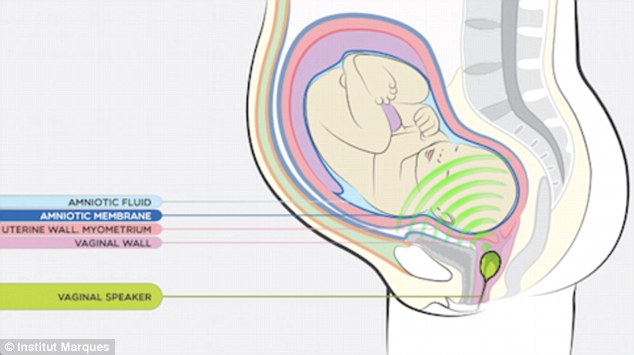
Baby singing in the womb

Interesting article here, I could not post the video but follow the link for more information.

  • First study to show foetuses can hear sounds as young as 16 weeks
  • Pregnant women between 14 and 39 weeks took part in the study
  • Music played via an intravaginal device, and via speakers on the bump
  • Found 87% of foetuses responded directly to intravaginal sounds
  • Moved their mouths and tongues 'as if they were trying to sing' 


Link

Sunday, October 4, 2015

A letter to a midwife’s mamas

This is  a very beautiful letter from a midwife to a lady.  Women are amazing!

"I actually hope you don’t remember my name. I was your midwife and I’ve always thought that, if I did my job well, then you would only remember how amazing YOU were when it was time to birth your baby
Birth is hard work and I hate how our culture presents it as a nice, tidy little inconvenience.
But you went against that cultural norm and chose to birth your baby with the help of a midwife, with all of the pain, bodily fluids, doubt, and triumph that come along with choosing that path.
You were beautiful. I know, I know … you hadn’t showered for two days and you threw up six times … but when you got to 8cm, there was a beautiful glow in your cheeks. … and beads of sweat on your lip.  I put a cool washcloth on your forehead, knowing that you were near holding your baby, knowing that there might still be a ton of work to do, and knowing that every moment would be worth it for you.
You frantically looked around and gasped “I can’t do this anymore.”
And I looked you in the eye and said, “You can do this. You are doing this. Don’t be afraid!”
And you believed me, as well you should have, because I was telling you the truth."


Thursday, October 1, 2015

Navajo Midwives in New Mexico plan on opening the first Native American Birthing Center

This is just wonderful and very encouraging.  I believe it is so important to maintain the culture of Native American  women, in fact, not just Native Americans but also the world over. 

 “I’d like to see a nice building with pictures of our grandmothers, cedar welcoming you into the door, and moccasins for babies instead of blankets," says Gonzales. "I want a place where women and families feel welcome.”


I wish my midwifery sisters all the best of luck and love. 

http://www.colorlines.com/articles/navajo-midwives-new-mexico-plan-first-ever-native-american-birth-center

Friday, May 22, 2015

Placenta Traditions Around the World


"In Indonesia, the baby's placenta is considered its twin and becomes a kind of guardian for the child. Family members and birthing attendants bury the placenta outdoors. 
The Igbo of Nigeria, some people of Malaysia, and many other cultures also consider the placenta a twin and bury it outdoors.
In Cambodia, the location of the placenta's burial is very important, as it is considered the origin of the baby's soul. Spiked plants are often planted around the burial place to keep away evil spirits.The tradition in Cambodia is to wrap the placenta in banana leaves and keep it close to the newly born child for three days, after which it is given a burial.
The Maori of New Zealand call the placenta the whenua, or "the land." The placenta and the umbilical cord are placed in a special container and buried on the child's tribal land, thus reinforcing that child's tie with their birthplace. Ipu Whenua

In many Asian countries, especially China, the placenta has long been regarded as a source of life and energy. The placenta is dried and taken as a supplement or added to food dishes for it’s health and healing benefits.

In Thailand, the placenta is cured with salt and placed in a clay pot. The pot is buried in a special site under a tree with the month of the child's birth determining which way the pot will face.

There are a few regions in South America where the
the placenta is cremated and and buried in the ground where it is believed that it will be protected from evil entities.


In America, the Navajo Indians bury the placenta within their reservation as an honour to their ancestors. Items are also commonly buried with the placenta such as books or religious items in hopes that the child will be smart or pursue certain skills or traits.


Hawaiians also practice burial rituals with a new tree planted over the placenta. It is believed that the placenta must be treated as a sacred object and that proper burial rites be given to ensure the good health of the new baby.

The placenta is highly regarded in many cultures around the world, and this sacred treatment is a testament to the significance of the placenta as an important symbol of life, energy, and spirit.

Birth control?!?
The placenta isn't exactly considered birth control, but reportedly in Transylvania, a couple who wanted no more children would burn their baby's placenta, and then the father would drink the ashes to render himself infertile (supposedly).
In the Ukraine, families avoid burying the placenta in a doorway, which could mean the couple will have no more children. Some Ukrainian midwives claimed they could tell how many subsequent babies a couple would have by examining the placenta.
It appears that humans are more likely to bury the placenta than consume it. But either way, it's clear that many cultures consider the placenta an important symbol, of life, spirit, and belonging.

Placental Traditions around the World